
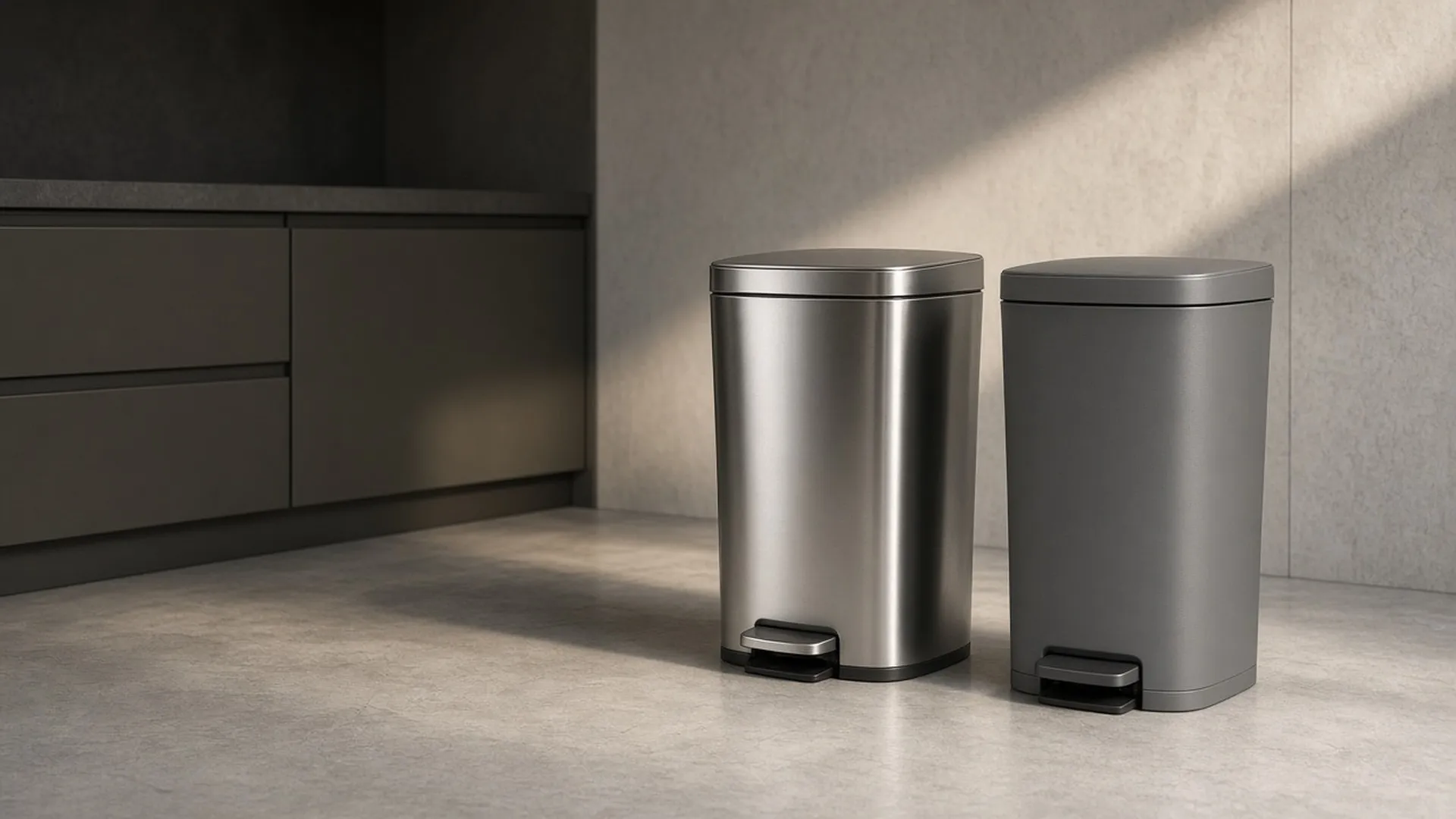
Stainless steel vs plastic trash cans
What each material means for cleaning, care, and an old can.
Disclosure: We may earn a commission if you buy through links on this page. It does not change our guidance. Affiliate Disclosure
Two common materials
Kitchen cans come in stainless steel, plastic, or both, such as a steel shell around a plastic inner bucket. We make no claim that one material is cleaner, stronger, or longer lasting than the other.
Inner buckets
Some cans have a removable inner bucket that lifts out for emptying and washing. Check whether the bucket comes out before you buy.
Cleaning by the label
The CDC says to clean surfaces using a product suitable for each surface, following instructions on the product label. Read both the cleaner's label and the can maker's care instructions.
Finish and coating claims
Some cans are sold with finish or coating claims. We do not test products and do not repeat those claims.
When a can wears out
EPA says local recycling programs may have different rules, and that some types of plastics are not accepted in community recycling programs. Ask your program whether it takes a metal or plastic can, or where to drop one off.
Recyclable labels
The FTC Green Guides say a product should not be marketed as recyclable unless it can be collected, separated, or otherwise recovered from the waste stream through an established recycling program. A recyclable label on a can is the maker's claim, not ours.
Sources: CDC, When and How to Clean and Disinfect Your Home; EPA, How Do I Recycle Common Recyclables; eCFR, 16 CFR Part 260, Guides for the Use of Environmental Marketing Claims (FTC Green Guides).
FAQ
General information only. Keep a trash can that holds spoiled food, sharp objects, or batteries behind a lid a child cannot open, or out of a child's reach. Knot plastic bags before you throw them away, and keep button and coin batteries out of reach of children. Keep cleaning products in their original packaging, out of sight and reach of children and pets, and never mix cleaning or disinfecting products. Read and follow the label on every cleaner and the maker's manual for your can, including how to change or remove its batteries. A swallowed button or coin battery needs medical help right away; do not delay. If you think a child swallowed something harmful, call Poison Help at 1-800-222-1222; if the child is unconscious, not breathing, or having convulsions or seizures, call 911. If a pet did, call your veterinarian or a pet poison control center right away. In an emergency, call 911.
Next: sizes
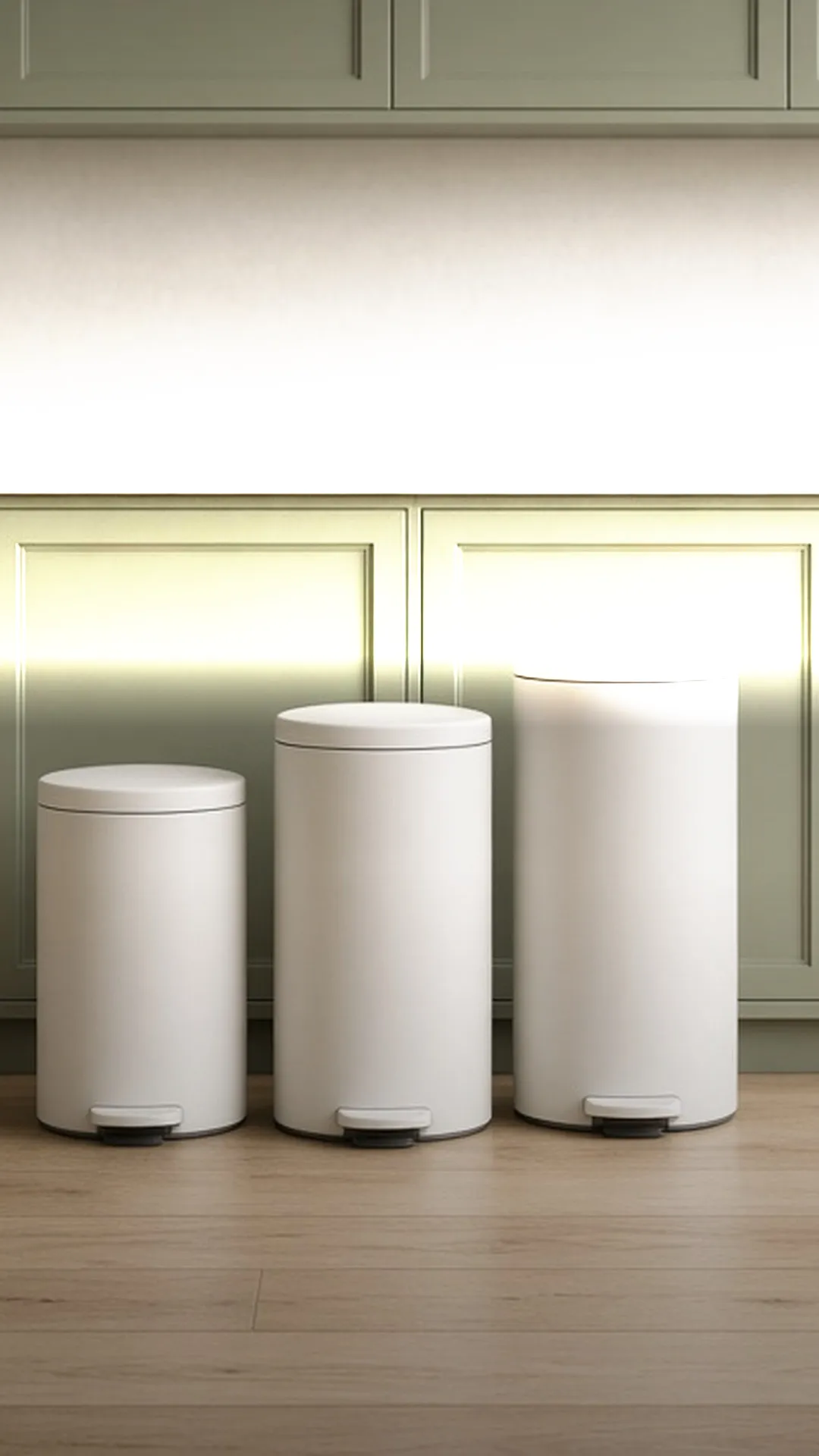
Capacity, footprint, shape.
