

House flies and maggots in the trash
How flies breed in garbage, and how lids and cleaning help.
Disclosure: We may earn a commission if you buy through links on this page. It does not change our guidance. Affiliate Disclosure
What maggots are
University of Maryland Extension says house fly larvae, or maggots, are whitish with no eyes or legs. It says egg-laying female flies seek out any warm, moist material that has sufficient food for larval development.
Warm weather speeds it up
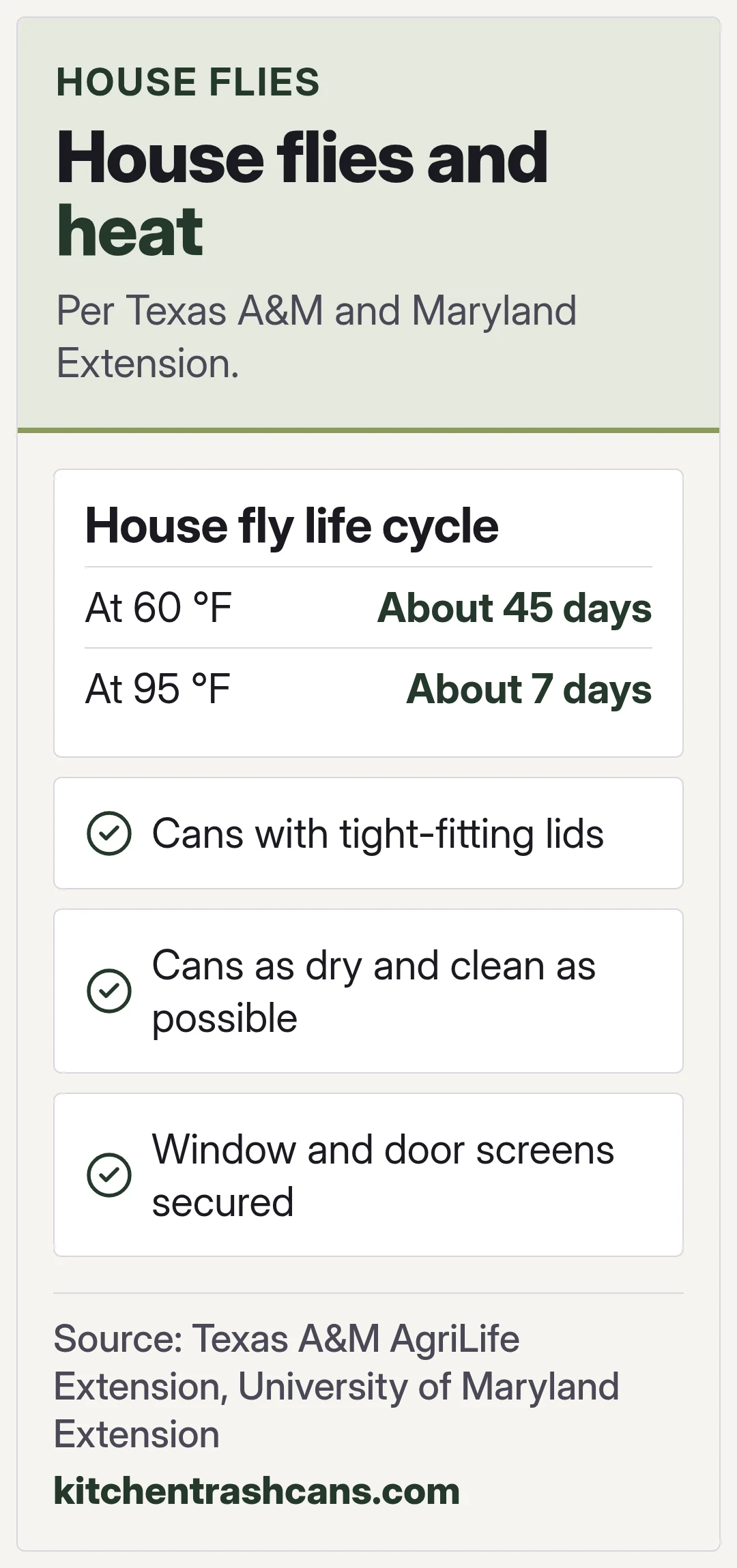
Texas A&M AgriLife Extension says house flies breed in decaying organic matter such as livestock feces and garbage. It says that at 60 °F a house fly takes about 45 days to go through its life cycle, and at 95 °F about 7 days.
Lids and dry cans
Maryland Extension says to remove trash promptly or secure it by using cans with tight-fitting lids, and to keep garbage cans as dry and clean as possible.
Clean under the liner
Texas A&M says to check under liners in garbage containers and, if necessary, use soap and water to remove all organic residues. Our cleaning guide covers the CDC's clean-first approach.
Keep adults out
Maryland Extension says to secure window and door screens, repair gaps in weather-stripping, and seal holes and other entry points. It says insecticide spraying is generally not effective or recommended inside the home.
FAQ
General information only. Keep a trash can that holds spoiled food, sharp objects, or batteries behind a lid a child cannot open, or out of a child's reach. Knot plastic bags before you throw them away, and keep button and coin batteries out of reach of children. Keep cleaning products in their original packaging, out of sight and reach of children and pets, and never mix cleaning or disinfecting products. Read and follow the label on every cleaner and the maker's manual for your can, including how to change or remove its batteries. A swallowed button or coin battery needs medical help right away; do not delay. If you think a child swallowed something harmful, call Poison Help at 1-800-222-1222; if the child is unconscious, not breathing, or having convulsions or seizures, call 911. If a pet did, call your veterinarian or a pet poison control center right away. In an emergency, call 911.



Next: fruit flies
Find where they breed.
