

Fruit flies in the kitchen
Where they breed, and why sanitation comes first.
Disclosure: We may earn a commission if you buy through links on this page. It does not change our guidance. Affiliate Disclosure
Why they show up
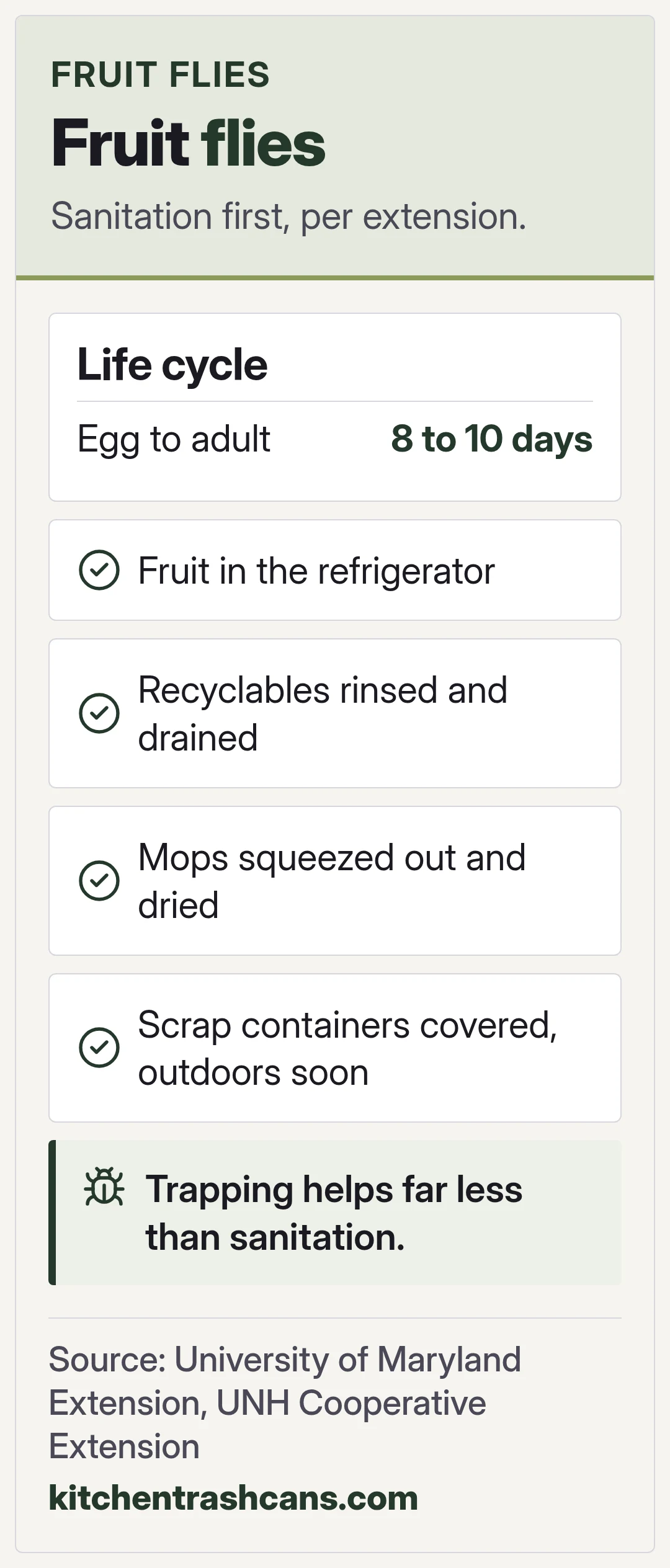
University of Maryland Extension says fruit flies are attracted to overripe fruits, vegetables, and fermenting foods, and that the female lays eggs on the surface of the food or fermenting liquid. It says the entire life cycle takes 8 to 10 days.
Trash and recycling as breeding sites
Texas A&M AgriLife Extension lists the wet bottoms of trash cans when plastic liners have leaked, and recycling bins with unrinsed wine, beer, or soda containers, among common fruit fly breeding sites. It also lists damp, dirty mops, brooms, or cleaning rags.
Sanitation comes first
Maryland Extension says the primary control for fruit flies is sanitation. It says to keep fruit stored in the refrigerator, rinse and drain bottles and cans that are to be recycled, and squeeze out mops thoroughly and dry them.
Take out the trash
Texas A&M says fruit flies can be controlled by taking out the trash or removing unrefrigerated, overripe fruit, or rotting vegetables. UNH Cooperative Extension says to cover containers of kitchen scraps headed for the compost pile and get them outdoors soon.
Traps help less than cleaning
UNH says trapping is nowhere near as effective as practicing good kitchen sanitation. Maryland Extension describes a homemade trap of apple cider vinegar and a drop of dish soap in a covered jar. Texas A&M says traps or sprays may provide temporary relief, but eliminating the breeding site is essential for complete control.
FAQ
General information only. Keep a trash can that holds spoiled food, sharp objects, or batteries behind a lid a child cannot open, or out of a child's reach. Knot plastic bags before you throw them away, and keep button and coin batteries out of reach of children. Keep cleaning products in their original packaging, out of sight and reach of children and pets, and never mix cleaning or disinfecting products. Read and follow the label on every cleaner and the maker's manual for your can, including how to change or remove its batteries. A swallowed button or coin battery needs medical help right away; do not delay. If you think a child swallowed something harmful, call Poison Help at 1-800-222-1222; if the child is unconscious, not breathing, or having convulsions or seizures, call 911. If a pet did, call your veterinarian or a pet poison control center right away. In an emergency, call 911.



Next: house flies and maggots
Tight lids, dry cans.
