
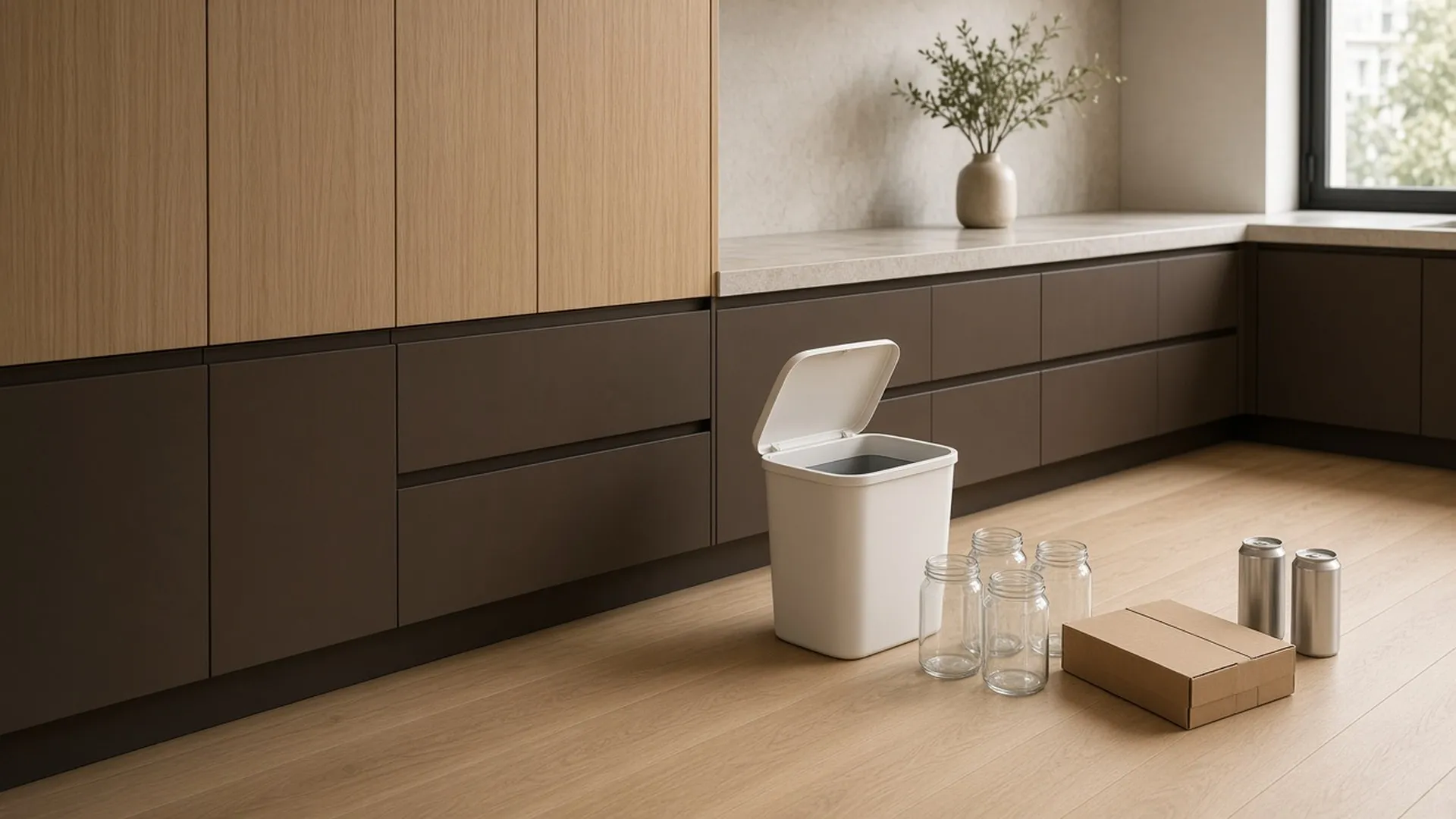
Recycling at home, explained
What EPA says goes in the bin, and why your local program decides.
Disclosure: We may earn a commission if you buy through links on this page. It does not change our guidance. Affiliate Disclosure
Reduce and reuse first
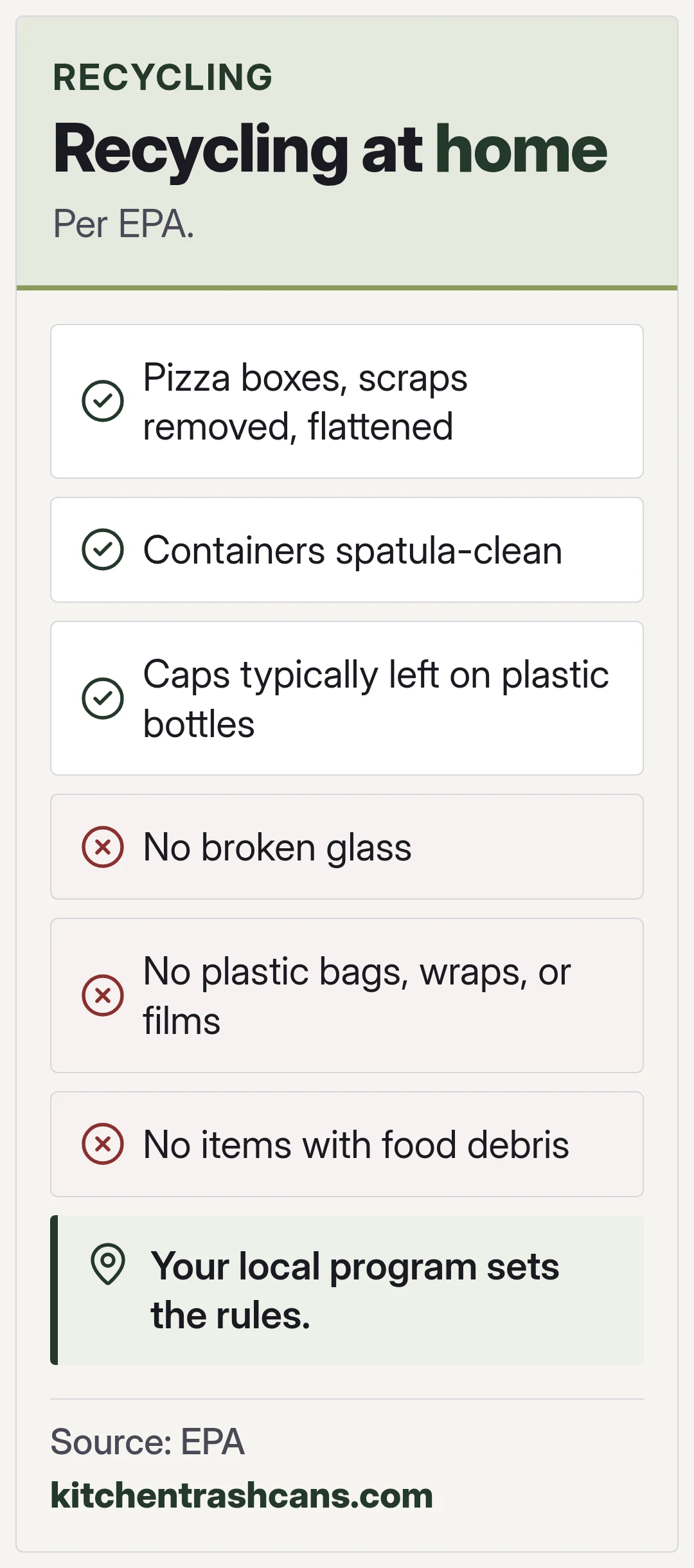
EPA says products should only be recycled if they cannot be reduced or reused. Its waste management hierarchy puts source reduction and reuse ahead of recycling.
Your local program decides
EPA gives general answers but says your local program may have different rules. Check with your local recycling program to learn what it accepts.
Paper and cardboard
EPA says pizza boxes can be recycled even if they have grease in them, once you remove any food scraps and flatten the box. It says to flatten boxes before placing them in the bin.
Plastics
EPA says some types of plastics are not accepted in community recycling programs. It says plastic bags, wraps, and films cannot go in your household recycling bin, and that retail and grocery stores often accept them. It says items with food debris cannot be recycled.
Glass and aluminum
EPA says broken glass should not go into the recycling bin, because glass shards can harm workers and damage equipment. It says that, generally, aluminum cans should not be crushed before recycling, because in areas with single-stream recycling, crushed cans are harder to detect when they are sorted. It says crushing cans is not an issue in areas with multi-stream recycling.
Spatula-clean
For food containers, EPA says to rinse or scrape any food residue off, and that "spatula-clean" is clean enough to recycle.
FAQ
General information only. Keep a trash can that holds spoiled food, sharp objects, or batteries behind a lid a child cannot open, or out of a child's reach. Knot plastic bags before you throw them away, and keep button and coin batteries out of reach of children. Keep cleaning products in their original packaging, out of sight and reach of children and pets, and never mix cleaning or disinfecting products. Read and follow the label on every cleaner and the maker's manual for your can, including how to change or remove its batteries. A swallowed button or coin battery needs medical help right away; do not delay. If you think a child swallowed something harmful, call Poison Help at 1-800-222-1222; if the child is unconscious, not breathing, or having convulsions or seizures, call 911. If a pet did, call your veterinarian or a pet poison control center right away. In an emergency, call 911.
Next: recycling symbols
What the triangle means.
