
Recycling symbols and plastic numbers
What the numbered triangle means, and what it does not.
Disclosure: We may earn a commission if you buy through links on this page. It does not change our guidance. Affiliate Disclosure
The number in the triangle
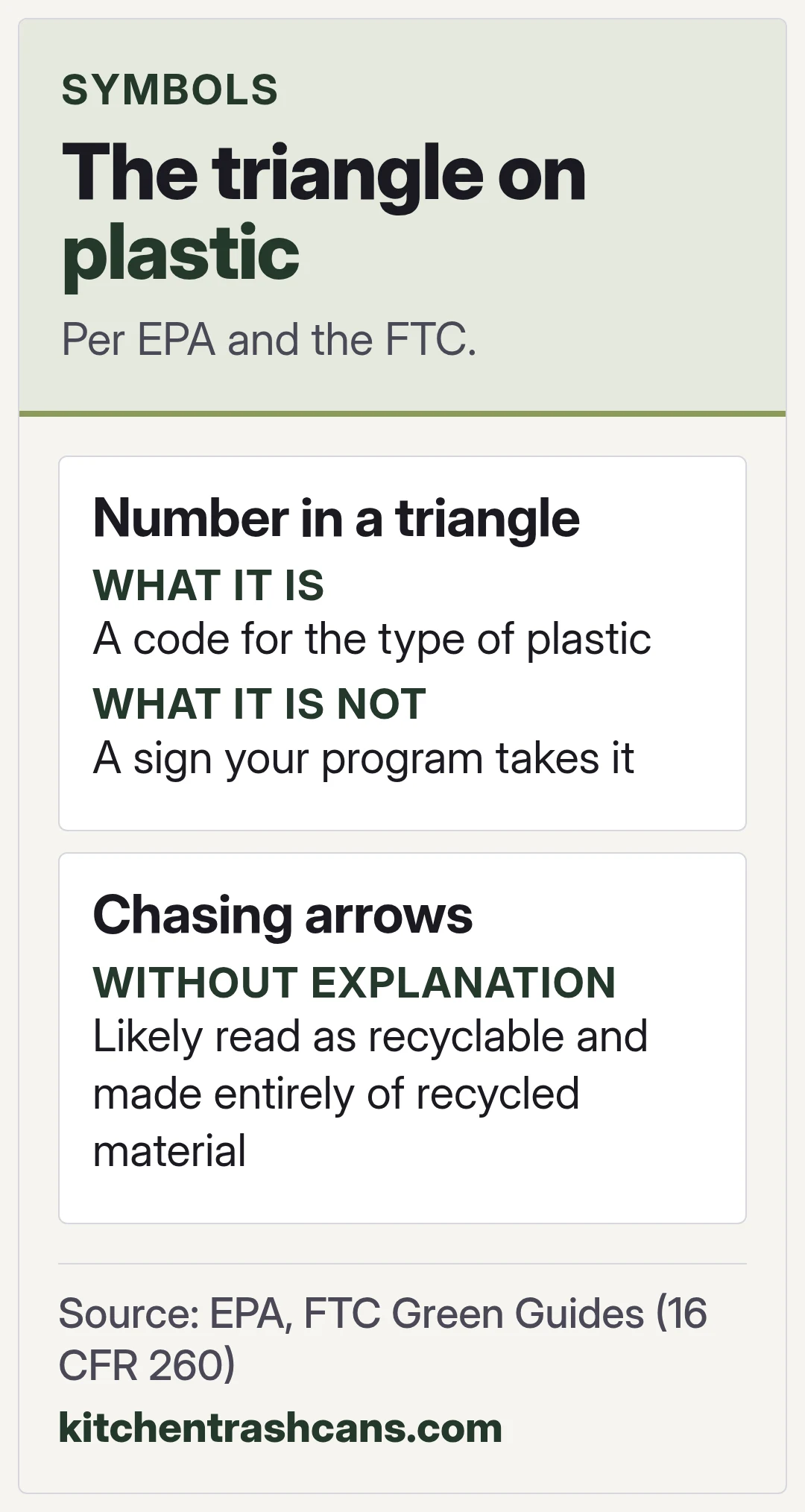
EPA says the symbols on the bottom of plastic bottles and containers were created to identify the type of plastic used to make the container. It says the resin number sits in a triangle that looks very similar to the recycling symbol.
A code, not a promise
EPA says the symbol does not necessarily mean the item can be collected for recycling in your community. Use it to compare against what your local program accepts.
What the FTC calls it
The FTC Green Guides call it the Resin Identification Code (RIC): a design of arrows in a triangular shape, with a number in the center and an abbreviation for the plastic resin. They say a conspicuous RIC on the front label is a recyclable claim, but an RIC placed inconspicuously, such as embedded in the bottom of a container, without more, is not.
The chasing arrows
EPA says the three steps of recycling form a continuous loop, represented by the familiar chasing arrows recycling symbol. The Green Guides say a three-chasing-arrows symbol shown without explanation likely conveys that a package is both recyclable and made entirely from recycled material.
Recyclable claims
The Green Guides say a product or package should not be marketed as recyclable unless it can be collected, separated, or otherwise recovered through an established recycling program. They say marketers should qualify the claim when recycling facilities are available to less than a substantial majority of consumers or communities, which they define as at least 60 percent.
Why it matters at the bin
EPA says confusion about what can be recycled often leads to recyclables going in the trash or trash going in the recycling bin.
FAQ
General information only. Keep a trash can that holds spoiled food, sharp objects, or batteries behind a lid a child cannot open, or out of a child's reach. Knot plastic bags before you throw them away, and keep button and coin batteries out of reach of children. Keep cleaning products in their original packaging, out of sight and reach of children and pets, and never mix cleaning or disinfecting products. Read and follow the label on every cleaner and the maker's manual for your can, including how to change or remove its batteries. A swallowed button or coin battery needs medical help right away; do not delay. If you think a child swallowed something harmful, call Poison Help at 1-800-222-1222; if the child is unconscious, not breathing, or having convulsions or seizures, call 911. If a pet did, call your veterinarian or a pet poison control center right away. In an emergency, call 911.


Next: recycling at home
What goes in the bin.
