
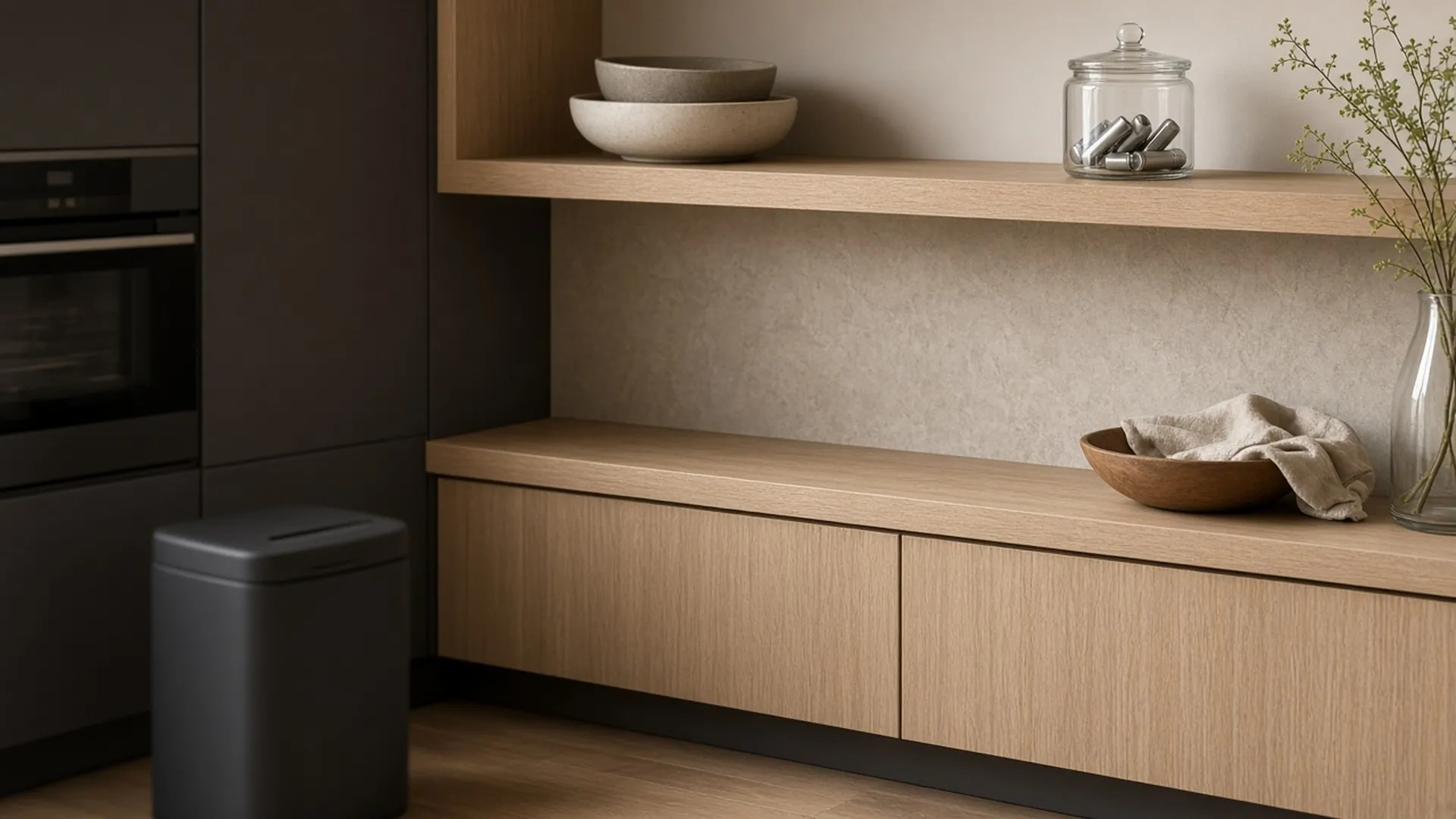
Batteries and the kitchen trash
Which batteries can go in the trash, and which cannot.
Disclosure: We may earn a commission if you buy through links on this page. It does not change our guidance. Affiliate Disclosure
Why it matters
EPA says certain batteries should not go in household garbage or recycling bins. It says batteries can have enough energy to injure or start fires even when used and when they appear to be discharged.
Know the type
EPA says battery types are identified by marking and labeling, not by the battery's shape or the color of the label. It says to check for the word "lithium" marked on the battery.
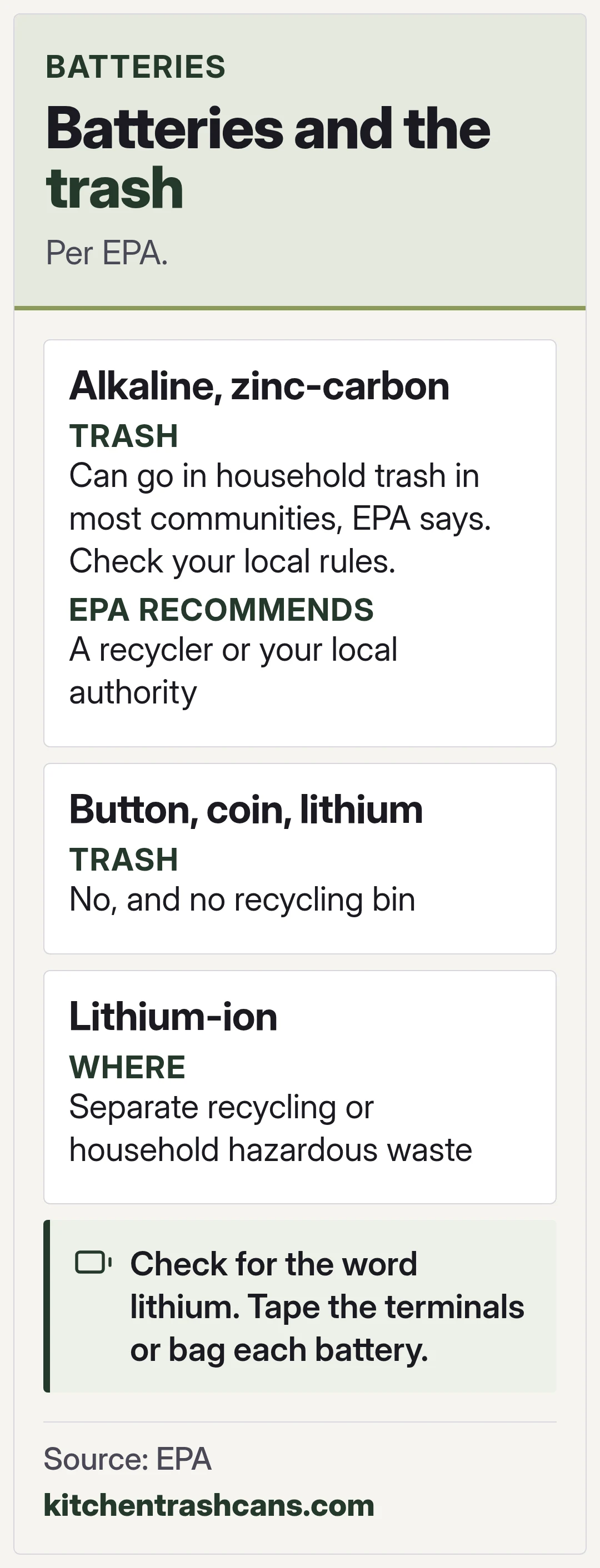
Alkaline and zinc-carbon
EPA says: "In most communities, alkaline and zinc carbon batteries can be safely put in your household trash." Its recommendation is to send them to battery recyclers or check with your local or state solid waste authority.
Lithium, button, and coin cells
EPA says not to put button-cell, coin, or lithium single-use batteries in the trash or municipal recycling bins. It says to place each battery in a separate plastic bag, or put non-conductive tape, such as electrical tape, over the terminals.
Lithium-ion
EPA says lithium-ion batteries, and devices containing them, should not go in household garbage or recycling bins, and should go to separate recycling or household hazardous waste collection points. To prevent fires, it says to tape battery terminals or place the batteries in separate plastic bags.
Sensor cans and children
A touchless trash can runs on whatever power source its maker chose; the manual says which, and how to change it. EPA says button-cell or coin batteries can be a swallowing hazard and should be stored out of the reach of young children. The AAP says to keep button and lithium coin batteries out of reach of children.
FAQ
General information only. Keep a trash can that holds spoiled food, sharp objects, or batteries behind a lid a child cannot open, or out of a child's reach. Knot plastic bags before you throw them away, and keep button and coin batteries out of reach of children. Keep cleaning products in their original packaging, out of sight and reach of children and pets, and never mix cleaning or disinfecting products. Read and follow the label on every cleaner and the maker's manual for your can, including how to change or remove its batteries. A swallowed button or coin battery needs medical help right away; do not delay. If you think a child swallowed something harmful, call Poison Help at 1-800-222-1222; if the child is unconscious, not breathing, or having convulsions or seizures, call 911. If a pet did, call your veterinarian or a pet poison control center right away. In an emergency, call 911.
Next: touchless cans
A sensor opens the lid.
