
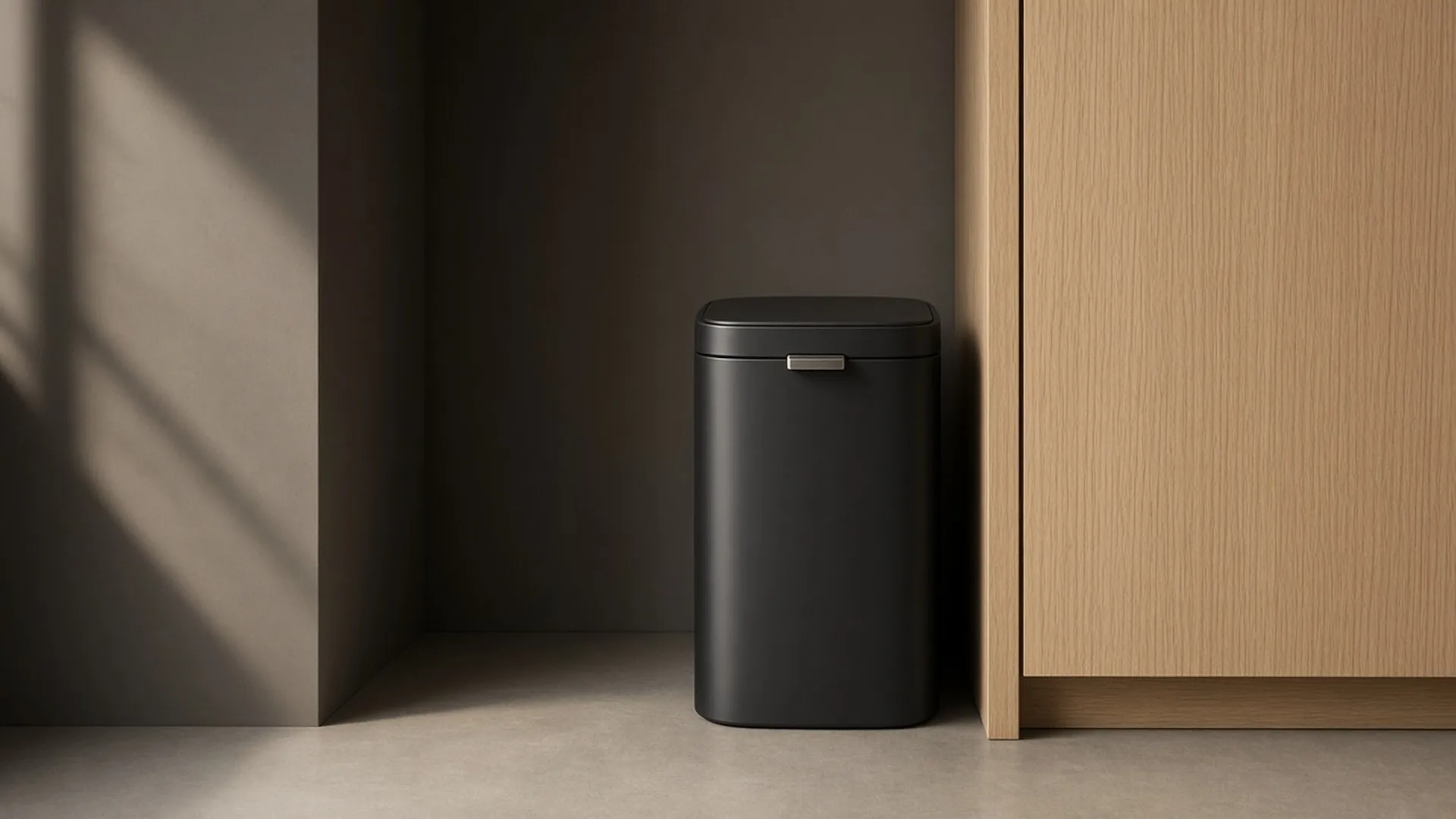
Children, pets, and the kitchen trash
Covers, bags, batteries, and who to call.
Disclosure: We may earn a commission if you buy through links on this page. It does not change our guidance. Affiliate Disclosure
Children get into trash
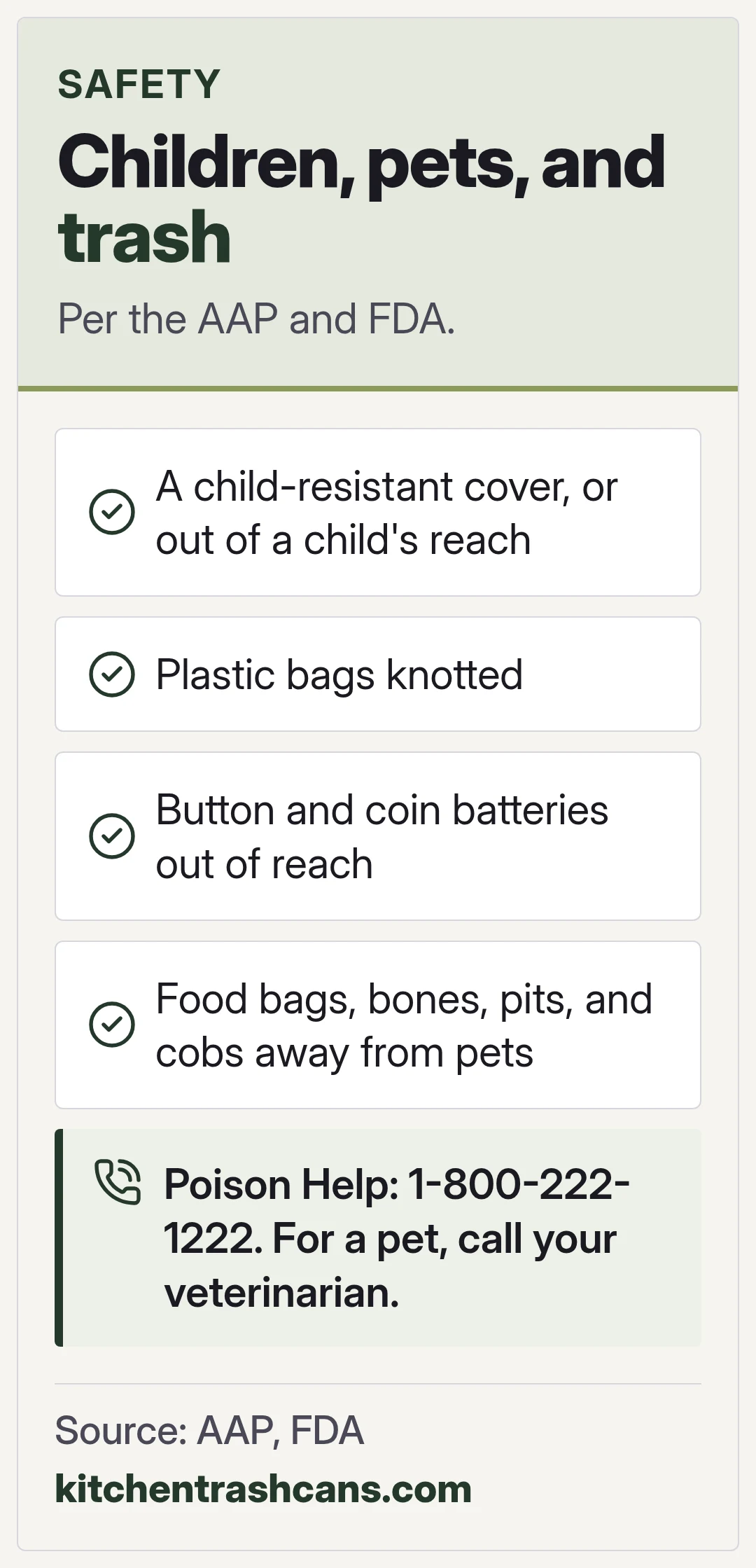
The AAP says to keep in mind that children may get into trash containers. It says trash containers that hold spoiled food, sharp objects such as discarded razor blades, or batteries should have a child-resistant cover or be kept out of a child's reach.
Plastic bags
The AAP says plastic bags can suffocate children. It says to knot them before you throw them away, and that even a small torn-off piece can become a potential choking hazard.
Button batteries
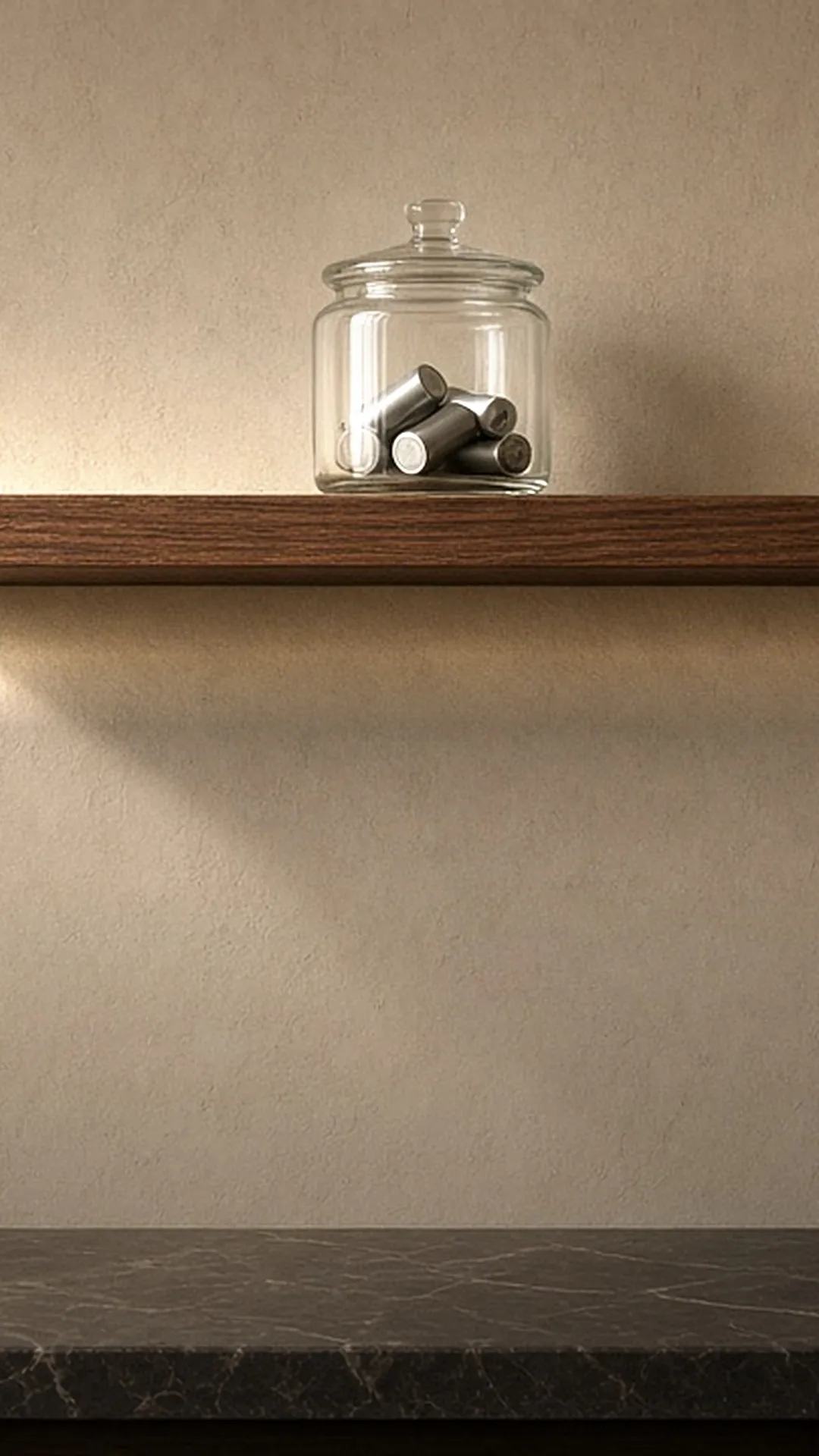
The AAP says button or lithium coin batteries can cause swift, life-threatening damage to the esophagus or intestines when inhaled or swallowed, and to keep them out of reach of children. EPA says not to put button-cell, coin, or lithium single-use batteries in the trash or municipal recycling bins.
Dogs and food bags
The FDA says dogs are typically more likely than cats to sniff out food bags, and that a thin bag can wrap around a dog's nose and mouth and suffocate it. It also says avocado pits, corn cobs, and bones can get stuck in a pet's digestive tract.
Locking lids
Some cans have a latch or a locking lid. We do not test them, and we do not call any can child-proof, child-resistant, or pet-proof. The AAP describes the goal as a child-resistant cover, or a can kept out of a child's reach. That is the AAP's phrase for the goal, not a rating we give any product.
If something is swallowed
The AAP says that if your child is unconscious, not breathing, or having convulsions or seizures, call 911 or your local emergency number right away. If your child does not have these symptoms, it says to call Poison Help at 1-800-222-1222. HRSA says Poison Help is available 24/7 in over 100 languages. For a swallowed button battery, the National Capital Poison Center says to call a poison center at 1-800-222-1222: "Don't delay. Immediate treatment decreases severity." The FDA says that if you think your pet has eaten something potentially dangerous, call your veterinarian or a pet poison control center right away.
Sources: American Academy of Pediatrics, HealthyChildren.org, Childproofing Your Home for Poisons; American Academy of Pediatrics, HealthyChildren.org, Home Safety: Tips for Families With Young Children; FDA, Potentially Dangerous Items for Your Pet; HRSA, Poison Help; National Capital Poison Center, Swallowed a button battery?; EPA, Used Household Batteries; CDC, When and How to Clean and Disinfect Your Home.
FAQ
General information only. Keep a trash can that holds spoiled food, sharp objects, or batteries behind a lid a child cannot open, or out of a child's reach. Knot plastic bags before you throw them away, and keep button and coin batteries out of reach of children. Keep cleaning products in their original packaging, out of sight and reach of children and pets, and never mix cleaning or disinfecting products. Read and follow the label on every cleaner and the maker's manual for your can, including how to change or remove its batteries. A swallowed button or coin battery needs medical help right away; do not delay. If you think a child swallowed something harmful, call Poison Help at 1-800-222-1222; if the child is unconscious, not breathing, or having convulsions or seizures, call 911. If a pet did, call your veterinarian or a pet poison control center right away. In an emergency, call 911.
Next: bag fit
Match the bag to the can.
