
Trash bag fit, explained
Why a bag slips or leaks, and how bag and can fit together.
Disclosure: We may earn a commission if you buy through links on this page. It does not change our guidance. Affiliate Disclosure
Bag size and can size
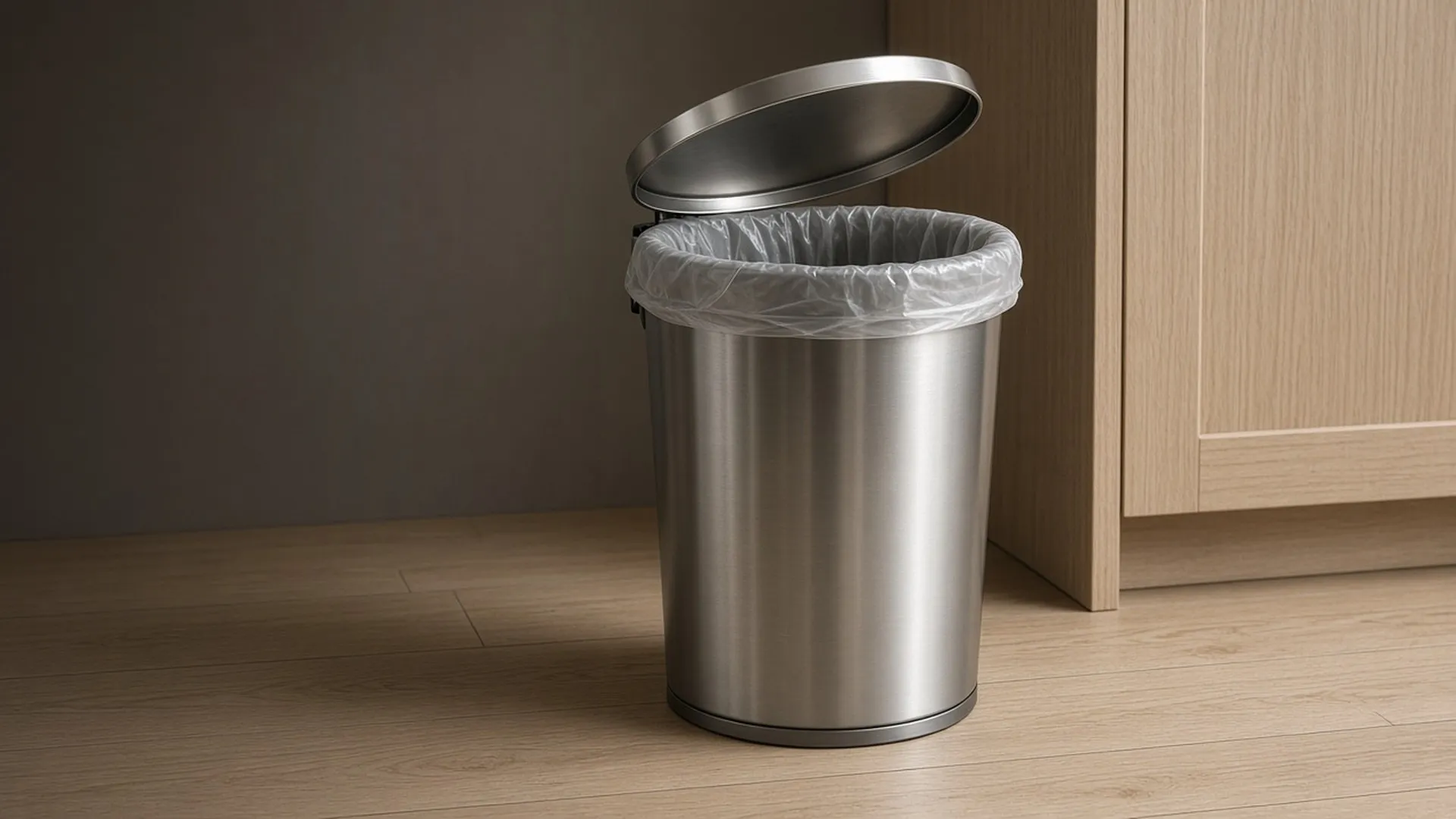
Bags and cans are both sold by capacity. A bag that matches the can's capacity and opening covers the rim and reaches the bottom. The can's maker may list the bag size it was made for.
Rims, rings, and holders
Some cans hold the bag with a rim, a ring that clamps over it, or a holder inside the lid. These keep the bag from slipping into the can. The manual shows how each one works.
Leaks under the liner
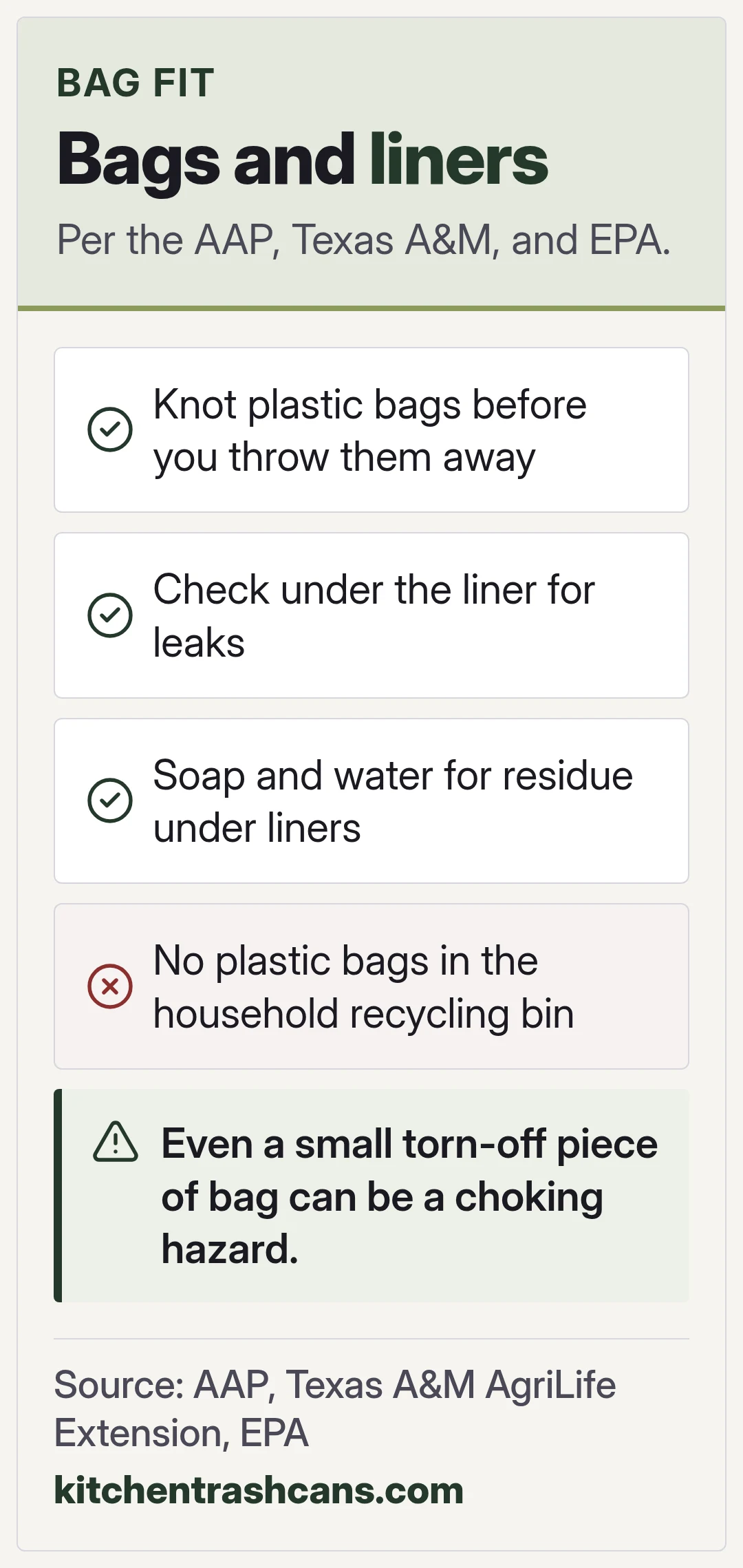
Texas A&M AgriLife Extension lists the wet bottoms of trash cans, when plastic liners have leaked, as a common fruit fly breeding site. It says to check under liners in garbage containers and, if necessary, use soap and water to remove all organic residues.
Plastic bags and children
The AAP says never to leave plastic bags lying around the house, because they can suffocate children. It says to knot them before you throw them away, so a child cannot crawl into them or pull them over their head.
Food bags and dogs
The FDA says thin food bags, such as chip, cereal, and snack bags, can wrap around a dog's nose and mouth and suffocate it. It says dogs are typically more likely than cats to sniff out food bags.
Old bags and recycling
EPA says plastic bags, wraps, and films cannot go in your household recycling bin, and that retail and grocery stores often accept them for recycling.
Sources: American Academy of Pediatrics, HealthyChildren.org, Home Safety: Tips for Families With Young Children; FDA, Potentially Dangerous Items for Your Pet; Texas A&M AgriLife Extension, Indoor Flies and Their Control; EPA, How Do I Recycle Common Recyclables; EPA, Frequently Asked Questions about Plastic Recycling and Composting.
FAQ
General information only. Keep a trash can that holds spoiled food, sharp objects, or batteries behind a lid a child cannot open, or out of a child's reach. Knot plastic bags before you throw them away, and keep button and coin batteries out of reach of children. Keep cleaning products in their original packaging, out of sight and reach of children and pets, and never mix cleaning or disinfecting products. Read and follow the label on every cleaner and the maker's manual for your can, including how to change or remove its batteries. A swallowed button or coin battery needs medical help right away; do not delay. If you think a child swallowed something harmful, call Poison Help at 1-800-222-1222; if the child is unconscious, not breathing, or having convulsions or seizures, call 911. If a pet did, call your veterinarian or a pet poison control center right away. In an emergency, call 911.

Next: sizes
Capacity, footprint, shape.
